
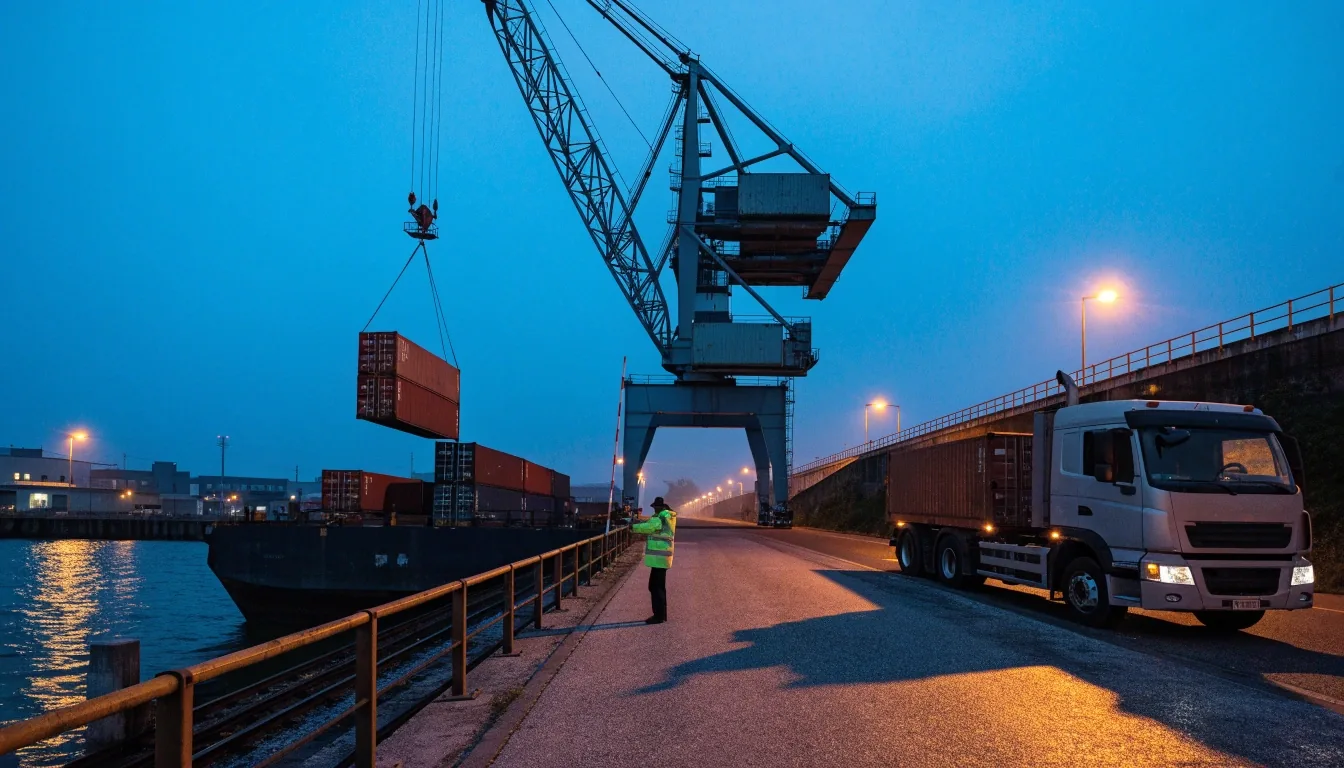
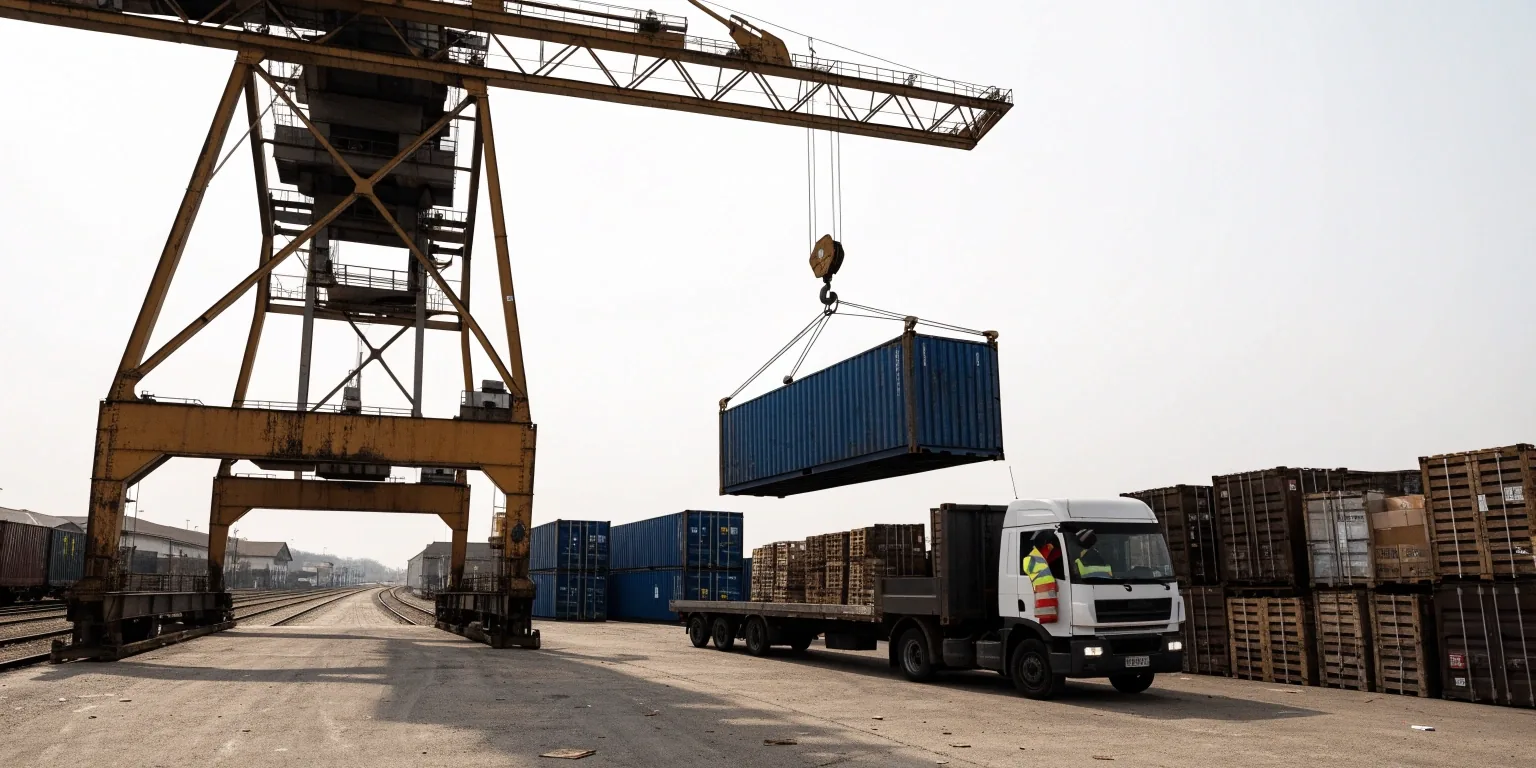
Stacked containers and gantry cranes at the Port of Antwerp-Bruges under a hazy noon sky

Belgian gateways

Belgian gateways and how your cargo moves through them

Four gateways, one corridor. Deep-sea at Antwerp-Bruges, air cargo at Brussels and Liège, and the inland rail, barge and road links that carry goods onward into the Benelux.

A small country sitting on very large freight infrastructure

Belgium is compact, but the port, airport and inland networks that cross it handle a large share of European trade. Antwerp-Bruges takes deep-sea vessels. Brussels Airport and Liège move air cargo. Inland rail, barge and road links carry goods onward into the Benelux and beyond.

How those pieces fit together decides whether a routing works or only looks cheap on paper. A rate that ignores the handover between a vessel, a terminal and a trailer rarely survives contact with a real deadline.

The four gateways

Where your cargo enters and leaves Belgium

Each gateway suits a different kind of shipment. Below is what each one is built for, and where the onward leg usually runs.

Port of Antwerp-Bruges

Deep-sea containers on Far East, North America and intra-European services, with FCL and LCL traffic and a dense onward network by road, rail and barge.

Ocean · FCL and LCL

Brussels Airport

Air cargo for pharmaceuticals, high-value goods and shipments where the schedule cannot slip, feeding the Brussels region and wider Benelux distribution.

Air · time-critical

Liège Airport

A second air option, and the better fit for certain routings and carriers. Worth pricing when capacity tightens or a carrier schedule points east rather than north.

Air · alternate

Inland rail, barge and road terminals

Rail terminals and barge connections behind the ports and airports let a long leg run off the motorway, then finish by truck — useful when road capacity is tight.

Inland · multimodal
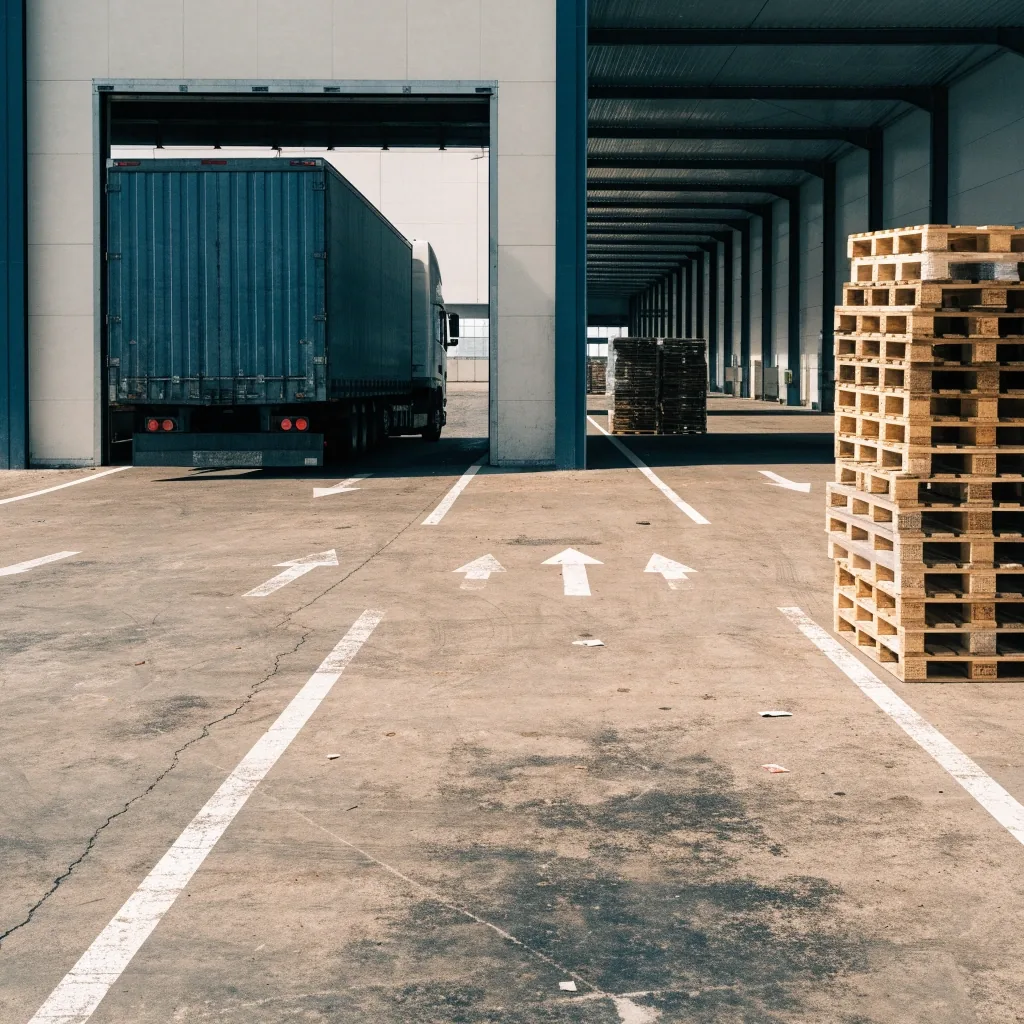
A pallet lane at a Belgian cross-dock with a trailer backing into a dock door

Antwerp-Bruges

The deep-sea anchor

Ocean freight through Antwerp-Bruges is the gateway most Belgian importers and exporters use. It takes the main deep-sea services and handles both full-container and groupage traffic. For most containerised cargo, this is where the journey begins or ends.

What to know before you book the sea leg

The port complex feeds a dense network of inland connections by road, rail and barge, so a container that lands here rarely travels far by road alone. Which onward leg you choose changes the cost and the delivery window more than the ocean leg does.

  • Full-container loads suit regular, high-volume shipments where the schedule can absorb a longer transit.
  • Groupage keeps smaller consignments moving without paying for a whole container.
  • Barge and rail legs off the quay reduce motorway miles and often reduce cost on long inland runs.

Is Antwerp-Bruges always the right choice?

For most deep-sea container traffic to and from Belgium, yes. Specific routings or carrier schedules occasionally favour another option, which is why we compare before we quote rather than defaulting to one port out of habit.

A semi-trailer travelling along a Belgian motorway in summer haze

The inland leg is where routing is won

Port, airport and inland terminal are three handovers, not three separate bookings. When they are planned together, the schedule holds and the cost stays where you expected it.

Two air gateways, and when each one fits

Brussels Airport is the main air cargo hub for the Brussels region and the wider Benelux network. Liège is the second option, and on some routings and carrier schedules it is the better fit. Having more than one air gateway matters most when capacity tightens.

Brussels Airport: air cargo for time-sensitive goods

Air cargo here is less about volume and more about time and handling standards. Pharmaceuticals, high-value goods and shipments where the schedule cannot slip move through this gateway. When a consignment has to be somewhere tomorrow, this is usually the door it comes through.

Expect tighter cut-off times, handling requirements that depend on the commodity, and a road leg into the Benelux that is usually short. Booking air cargo early matters more than booking it cheaply — the cost of a missed uplift is rarely recovered later in the week.
Liège as a second air option

Liège provides an alternative air gateway, and for certain routings and carriers it is the better fit. Having more than one air option matters when capacity tightens or when a carrier's schedule suits Liège better than Brussels.

We quote both where it makes sense, because the right airport depends on the route, not on habit.

Inland multimodal links

Behind the seaports and airports sits an inland network of rail terminals and barge connections. These let cargo travel a long leg without using the motorway, then finish by truck.

Intermodal is worth pricing alongside road

On longer, regular corridors a rail, barge or short-sea leg can carry most of the distance and the schedule can absorb the handover. That is when intermodal earns its place in a routing rather than being an afterthought.

It also helps when road capacity is tight, which in Belgium is a recurring condition rather than a rare one.

Rail terminals behind the ports

Container transfers between quay and inland terminal without touching a motorway. Best on regular volumes with a predictable weekly rhythm.

Barge connections on the waterways

Heavy or bulky consignments move by water where the terminal pair allows it. Slow but steady, and useful when road capacity is under pressure.

Road and the last mile

The final leg decides the day

Road freight carries the final leg almost everywhere, and it is the backbone of short-haul and last-mile distribution in Belgium. The sector is large and fragmented, and it has been under real pressure from fuel, wages, tolls and unpaid invoices, with carrier bankruptcies a recurring headline.

That is a planning fact, not a reason to avoid road. It is a reason to have more than one haulage relationship behind your shipment, so a single carrier's problem does not become your delay.

A driver handing a customs pouch through a cab window at a Belgian terminal

Four things we check on every road leg

  1. One Whether the trailer type matches the goods and the dock door at the delivery address.
  2. Two Whether the delivery window survives a realistic drive time, not an optimistic one.
  3. Three Whether the customs paperwork is complete before the truck leaves the terminal, so nothing waits at a gate.
  4. Four Whether a second haulier is available on the corridor, so a breakdown does not stop the delivery.

Choosing a routing that fits

Gateway choice comes down to the goods and the deadline. Deep-sea through Antwerp-Bruges for volume when weeks are acceptable. Air through Brussels or Liège when speed matters more than cost. Intermodal where a rail or short-sea leg can replace road miles.

We build the routing around your constraints rather than pushing everything through one preferred hub. That sometimes means quoting a second gateway you did not ask about, because it is the one that holds your date.

How forwarders package these services

Modern forwarders connect global trade routes to Europe's gateways and then assemble the pieces. Röhlig Belgium, for example, positions Antwerp-Bruges, Brussels and Liège as strategic gateways and offers FCL and LCL within its portfolio.

That is the model: a port leg, an air or inland leg, and a road leg, coordinated as one movement. The value is in the coordination, not in any single leg — which is also where a routing either holds together or falls apart.

  • Port leg to gateway
  • Air or inland leg
  • Road leg to door

Questions about Belgian gateways

Short answers to the questions that come up most often when a routing is being planned. If yours is not here, ask directly — the answer depends on your goods and your date.

Talk it through

Raveschoot 22, 9080 Lochristi, Belgium

Monday to Friday, 09:00–18:00

What are the main logistics hubs in Belgium?

Antwerp-Bruges for deep-sea containers, Brussels Airport and Liège for air cargo, and the inland rail, barge and road network that connects them to the wider Benelux region.

Is Antwerp-Bruges always the right choice for sea freight?

For most deep-sea container traffic to and from Belgium, yes. Specific routings or carrier schedules can occasionally favour another option, which is why we compare before quoting.

When does intermodal beat pure trucking?

On longer, regular corridors where a rail, barge or short-sea leg can carry most of the distance and the schedule can absorb the handover.

What do you need from us to compare routings?

The pickup and delivery addresses, the commodity and its weight or volume, and the date it has to arrive. If the goods need customs clearance, say so early — that paperwork shapes which gateway and which leg make sense.

Can you handle both the port and the onward delivery?

Yes. The port or air leg, any customs step and the road delivery are coordinated as one movement, so you are not managing three separate suppliers against one deadline.